WAIT Theory
Workforce AI Integration Theory
WAIT Theory is the foundational framework of the Zodiac Workforce Intelligence Institute. It provides a systematic model for understanding, measuring, and developing workforce intelligence across individuals, organizations, and institutions in the age of artificial intelligence.
"Beyond Credentials. Toward Measurable Workforce Intelligence."
— Zodiac Institute Doctrine
The Core Principle
Zodiac does not merely teach courses. Zodiac develops measurable workforce intelligence. WAIT Theory provides the scientific framework for assessing, developing, and aligning workforce capability in an era defined by artificial intelligence transformation.
The Five Dimensions of Workforce Intelligence
WAIT Theory defines five measurable dimensions that together comprise workforce intelligence.
Workforce Trust
The foundation of organizational performance. Measures leadership transparency, psychological safety, and collective confidence in organizational direction.
Trust enables capability. Without trust, no workforce transformation can succeed.
Alignment
The degree to which individuals, teams, and systems are oriented toward shared strategic objectives with coordinated operations.
Alignment amplifies effort. Misalignment dissipates it.
Resilience
The capacity to adapt, recover, and transform in response to disruption, change, and evolving workforce demands.
Resilience sustains performance through uncertainty.
Readiness
The preparedness of the workforce to perform, adapt, and grow. Encompasses skills, training effectiveness, and change adaptability.
Readiness precedes capability. Capability precedes performance.
AI Integration
The organization's preparedness to integrate artificial intelligence into workforce operations, workflows, and decision-making.
AI integration is not optional. It is the defining capability of the emerging workforce.
Theory to Application
WAIT Theory is operationalized through Zodiac Lab at three levels of application.
The Workforce Intelligence Model
A unified framework connecting all dimensions of workforce capability, development, and performance.
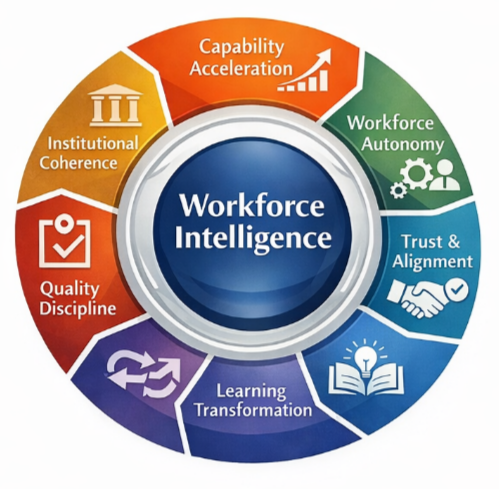
The Seven Forces of Workforce Intelligence
Workforce Intelligence is driven by seven interconnected forces that determine how individuals, organizations, and institutions develop, align, and create value in the AI era.
These forces operate as a dynamic system, not in isolation, shaping workforce readiness, performance, and long-term capability.
Capability Acceleration
The ability to rapidly develop, upgrade, and apply skills in response to changing workforce demands and technological evolution.
Workforce Autonomy
The capacity of individuals to operate with independence, decision-making ability, and adaptive responsibility within dynamic environments.
Trust & Alignment
The degree to which individuals, teams, and systems are aligned in purpose, values, and execution, supported by mutual trust.
Learning Transformation
The shift from traditional learning to continuous, adaptive, and intelligence-driven development integrated into real-world application.
Opportunity Fluidity
The ability to access, recognize, and convert opportunities into economic, professional, or organizational value.
Quality Discipline
The consistency of standards, execution excellence, and adherence to systems that ensure reliability and performance.
Institutional Coherence
The alignment between policies, structures, and systems that enable sustainable workforce development at scale.
Together, these seven forces form the operational foundation of Workforce Intelligence, enabling measurable alignment, adaptability, and value creation across all levels of the workforce system.
The Workforce Intelligence System Architecture
This diagram illustrates how AI capability, workforce development, and measurement systems are integrated within the Zodiac ecosystem.
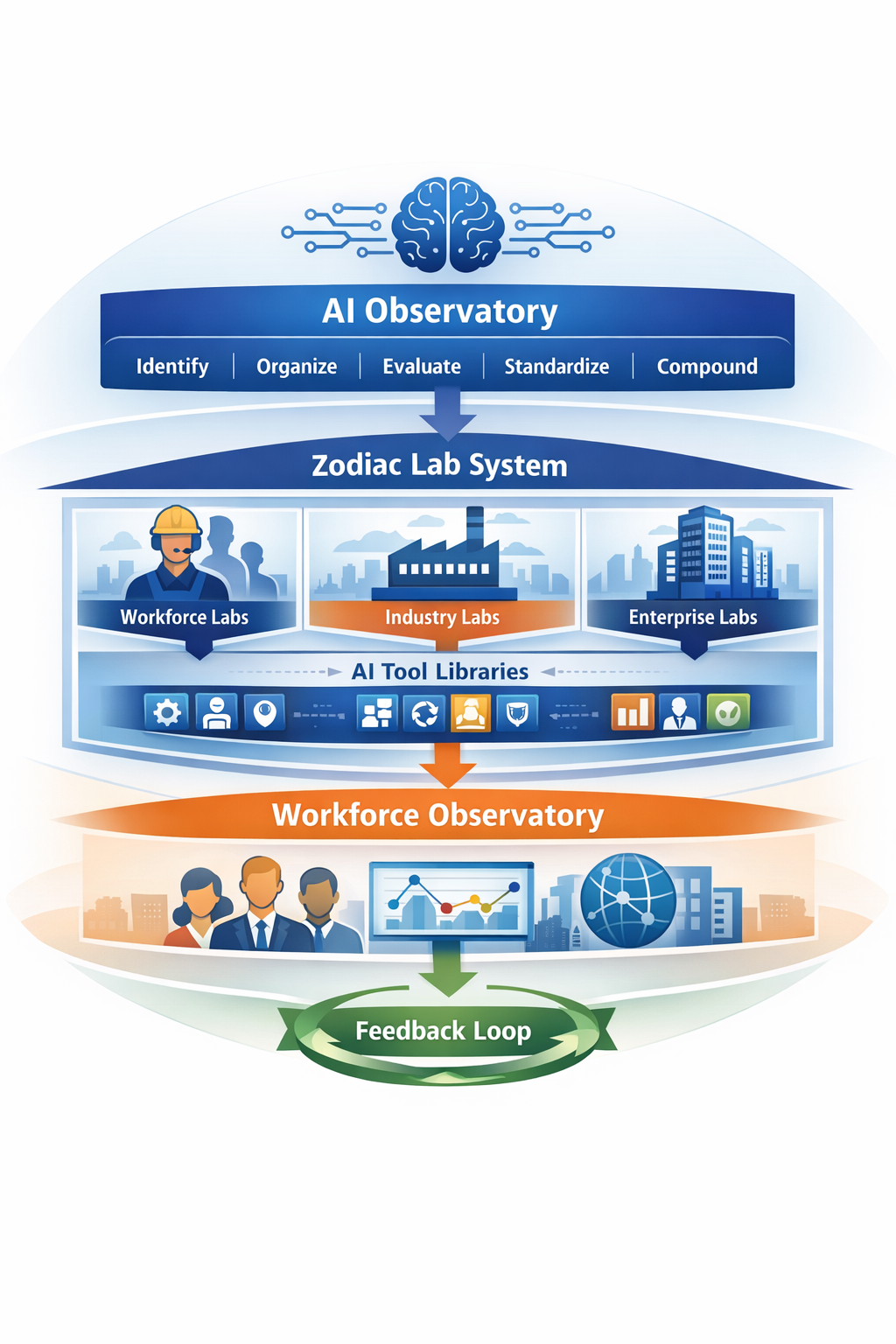
Figure 1: Zodiac Workforce Intelligence System Architecture
The Intelligence System
Two observatories provide the measurement and intelligence infrastructure for WAIT Theory.
Workforce intelligence at every layer.
WAIT Theory models workforce alignment as a stack — from the individual up to society — where each layer carries diagnostic, developmental, and transformational implications.
Societal-Global Intelligence
Cross-system workforce resilience, AI-era equity
Institutional Intelligence
Governance, doctrine, credentialing reform
Organizational Intelligence
Strategy → Operations alignment, AI integration
Team Intelligence
Coordination, shared mental models, hybrid collaboration
Individual Intelligence
Personal alignment, skills, trust, AI fluency
One composite. Five dimensions.
The Workforce Intelligence Index (WII) is the diagnostic instrument of WAIT Theory — a single composite score derived from five validated dimensions of workforce alignment. The WII enables institutional benchmarking, longitudinal tracking, and Human-AI era readiness assessment.
The forces that converge into intelligence.
Seven institutional forces continuously converge to determine alignment. WAIT Theory measures their balance, friction, and convergence pattern.
WAIT Theory across the Zodiac ecosystem.
The doctrine doesn't live in isolation. It drives every node of the institutional ecosystem.
Zodiac Intelligence Assistant
Powered by Zodiac Intelligence Core
Press Enter to send • Shift+Enter for new line